
x
In today's dynamic business landscape, optimizing storage areas is crucial for streamlined operations. As demand grows for dependable storage methods, businesses are increasingly focused on innovative techniques that boost productivity and ensure efficient organization. Discover how to revolutionize your facility with intelligent storage design.
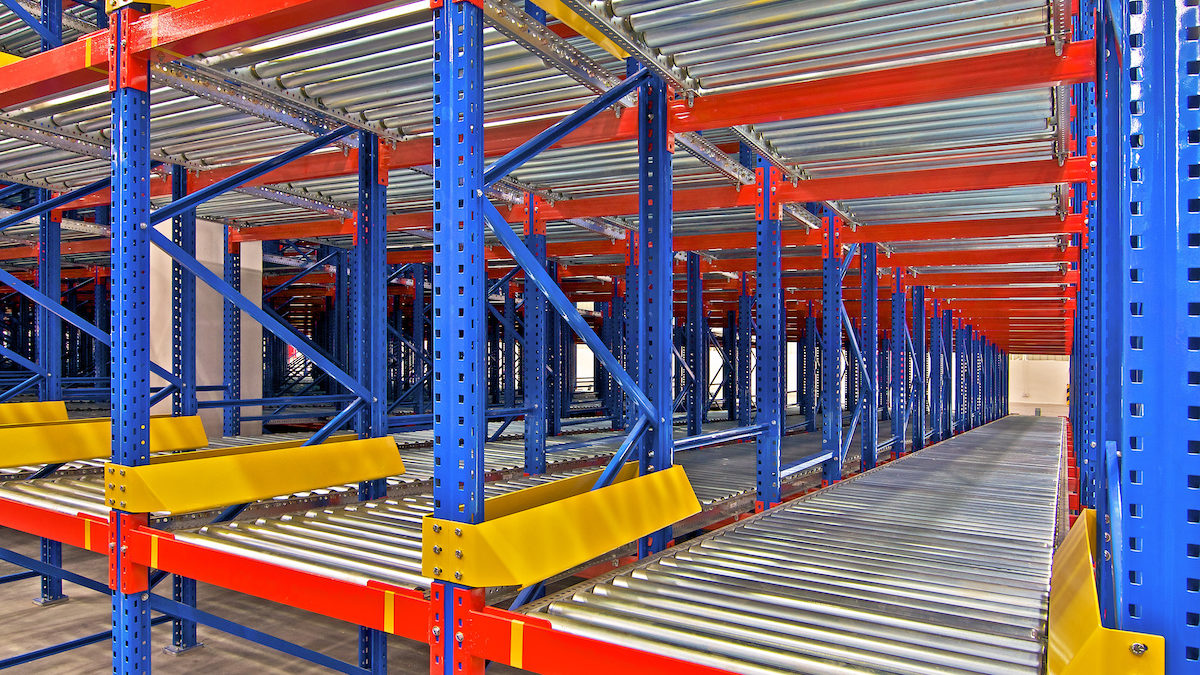
Before selecting racking systems, it's crucial to understand your warehouse requirements. This involves assessing inventory, throughput, and physical space limitations. This proactive approach prevents complications and saves costs.
Consider the nature of your inventory. Are you storing pallets of identical items or diverse shapes and sizes? Are temperature-sensitive goods requiring cold storage involved? Pallet options suit uniform, palletized goods, while specialized options might be needed for unique items. Next, consider throughput – how quickly inventory moves. High-throughput operations need systems allowing easy access and quick retrieval. If your warehouse is constantly active, choose a system minimizing bottlenecks and maximizing efficiency. Consider item access frequency; are items retrieved often, or do they sit longer? Faster turnover requires more accessible racking. Analyzing inventory types and turnover rates helps determine the most suitable system, ensuring efficient operations and optimal space utilization. For instance, a business dealing with perishable goods might prioritize a system that facilitates First-In-First-Out (FIFO) inventory management. Conversely, a company storing durable goods might opt for a system that maximizes storage density, even if it means slightly slower retrieval times.
Accurately measure your warehouse space, including floor area and ceiling height. Account for obstructions like columns, pipes, and lighting. Analyze how to best use horizontal and vertical space. Many warehouses underutilize vertical space, which can significantly increase storage capacity. Taller systems can boost storage density, but require forklifts that reach higher shelves. Consider the flow of goods and people; ensure enough space for aisles, loading docks, and equipment maneuvering. Efficient space analysis ensures the chosen racking system fits seamlessly, optimizing storage capacity and workflow. Think about aisle widths required for forklifts or other material handling equipment. Insufficient aisle space can lead to congestion and reduced efficiency, while excessively wide aisles waste valuable storage space. By carefully considering these factors, you can create a warehouse layout that maximizes both storage capacity and operational efficiency.
Consider future needs. Can your current system accommodate future growth? Choose scalable options easily expanded or reconfigured. Modular designs offer flexibility, allowing adding or removing sections as needed. Anticipate potential changes in your product mix. Will you store different goods in the future? Investing in a versatile system upfront prevents costly overhauls later. Planning for scalability is essential for efficient warehouse design. For instance, if you anticipate a significant increase in inventory volume in the next few years, you might consider investing in a system that can be easily expanded vertically or horizontally. Alternatively, if you foresee a shift in your product mix towards larger or heavier items, you might need to invest in a system with higher load-bearing capacity and wider bays. By carefully considering these potential future changes, you can ensure that your racking system remains a valuable asset for years to come.
The modern warehouse is dynamic. Shorter production cycles and the need to minimize costs are critical. This drives the adoption of automation, robotics, and flexible storage solutions.
Automation and robotics are revolutionizing warehouse racking, including Automated Storage and Retrieval Systems (AS/RS). These systems use robotic technology to automatically place and retrieve items, increasing speed and efficiency. Robotic picking and packing are becoming common, streamlining order fulfillment. Mobile robots, such as Automated Guided Vehicles (AGVs) and Autonomous Mobile Robots (AMRs), navigate the warehouse floor, transporting goods easily. These technologies enable adaptable and scalable solutions. Instead of fixed racking, warehouses can implement systems reconfigured quickly to accommodate changing inventory or product types. Seamlessly integrate these technologies into the warehouse management system. This allows real-time data analysis and optimization, ensuring peak racking system performance. For example, AS/RS can significantly reduce the time and labor required to locate and retrieve items, while mobile robots can automate the transportation of goods from one area of the warehouse to another. By integrating these technologies into your racking system, you can create a highly efficient and responsive warehouse operation.
Flexibility is paramount in modern warehouse design. Modular systems are designed to be easily reconfigured and adapted to meet changing storage needs. The SuperTrak Conveyance platform, a modular, high-speed solution, maximizes productivity and space efficiency. Modularity allows customization. Businesses can tailor systems to fit their layout and operational needs. This could involve adjusting bay height and depth, adding or removing sections, or integrating different racking types to accommodate various products. This adaptable approach aligns with flexible warehouse infrastructure trends. For instance, a company experiencing rapid growth might opt for a modular system that can be easily expanded to accommodate increasing inventory levels. Alternatively, a business dealing with seasonal fluctuations in demand might choose a system that can be quickly reconfigured to optimize space utilization during peak and off-peak periods.
While traditional systems remain vital, consider alternative storage solutions complementing existing infrastructure. Flexible Intermediate Bulk Containers (FIBCs) are ideal for storing and transporting bulk materials. Although not traditional racking, FIBCs offer innovative and flexible storage. They provide adaptable, space-efficient containment, especially for materials not fitting standard configurations. When selecting FIBCs, consider load capacity and safety to meet operational needs. Embracing these alternatives allows maximizing space and handling a wider product range efficiently. These large, durable bags are particularly well-suited for storing and transporting powders, granules, and other bulk materials that would be difficult or impractical to store in traditional racking systems. When selecting FIBCs, it's crucial to consider factors such as the type of material being stored, the weight and volume of the material, and the environmental conditions in the warehouse.
While maximizing storage density is a primary goal, the modern approach emphasizes customized solutions tailored to unique operational requirements. It's about creating a storage system seamlessly integrating with specific workflows, product types, and business needs.
Gone are one-size-fits-all warehouse racking solutions. Businesses recognize that their storage needs are unique. This has led to customized systems designed to address specific challenges and opportunities. Customization can take many forms, from adjusting rack heights and depths to accommodate oversized items, to incorporating specialized features for temperature-controlled storage or automated retrieval systems. The key is to analyze specific needs and design a system optimizing workflow, reducing errors, and improving efficiency. This might involve integrating with existing warehouse management systems or creating bespoke software to manage inventory. For example, a company storing unusually shaped items might require a system with adjustable shelves or custom-built containers to maximize space utilization and prevent damage. Alternatively, a business dealing with hazardous materials might need a system with specialized safety features, such as fire suppression systems or spill containment measures.
One advantage of customized racking is its inherent scalability. Instead of investing in a rigid system becoming obsolete, a tailored solution can adapt and expand with you. This might involve modular systems easily reconfigured or extended, or integrating automated technologies handling increasing throughput without significant physical changes. This adaptability is crucial in today's dynamic environment, where companies need to respond quickly to changing market demands. A customized system provides the flexibility to adjust storage capacity, accommodate new products, or reconfigure the warehouse layout with minimal disruption. This ensures the warehouse remains a strategic asset supporting business goals, rather than a constraint. For instance, a company experiencing seasonal fluctuations in demand might opt for a system that can be quickly reconfigured to accommodate peak season inventory levels. Alternatively, a business expanding its product line might need a system that can be easily extended to accommodate new storage requirements.
Customized solutions often integrate advanced technology, such as automated storage and retrieval systems (AS/RS), robotic picking solutions, and sophisticated warehouse management software. These technologies enhance efficiency, reduce labor costs, and improve accuracy. For example, an AS/RS system can automatically store and retrieve items, eliminating manual handling and reducing errors. Robotic picking solutions can quickly and accurately pick items for order fulfillment, while warehouse management software provides real-time visibility into inventory levels and tracks the movement of goods. By integrating these technologies with a customized system, you can create an optimized warehouse environment tailored to specific needs. The possibilities are vast, and the potential for improvement is significant when embracing a customized approach.
What are the advantages of using a Godrej Warehouse Management System for optimizing warehouse operations?
The Godrej Warehouse Management System (WMS) offers several benefits that enhance warehouse efficiency. It provides real-time inventory tracking, which improves accuracy in stock levels and reduces discrepancies. The system also facilitates better space utilization by optimizing racking layouts and managing storage locations effectively. Additionally, it streamlines operations through automated processes, reducing manual errors and improving order fulfillment times. By integrating with existing ERP systems, it ensures seamless data flow across business functions, enhancing overall productivity and decision-making.
How does a high-density racking system contribute to space optimization in a warehouse?
High-density racking systems, such as pallet flow or push-back racking, maximize vertical and horizontal space utilization by allowing more goods to be stored in a given area compared to traditional racking. These systems are designed to accommodate high inventory turnover and are ideal for operations with large volumes of similar products. By reducing the need for wide aisles, high-density racking systems increase storage capacity and improve the efficiency of material handling operations, enabling faster access and retrieval of products.
What considerations should be made when designing a warehouse racking layout?
Designing a warehouse racking layout requires careful consideration of several factors to ensure optimal efficiency and safety. Key considerations include understanding the types of products being stored, their turnover rates, and any special storage requirements such as temperature control for perishable goods. It's also important to factor in the available space, including ceiling height and floor area, to maximize storage capacity. Additionally, the layout should facilitate smooth traffic flow for personnel and equipment, ensuring easy access to all storage areas. Compliance with safety regulations and load-bearing capacities is crucial to prevent accidents and structural failures.
What are the benefits of mobile racking systems in cold storage environments?
Mobile racking systems are particularly beneficial in cold storage environments where space is at a premium due to the high cost of maintaining temperature-controlled areas. These systems allow for compact storage by eliminating fixed aisles and utilizing moving racks that can be opened as needed to access products. This maximization of space reduces energy consumption and lowers operational costs. Furthermore, mobile racking systems offer flexibility in storage configurations, making them ideal for varying inventory sizes and turnover rates, thereby enhancing efficiency in cold storage facilities.
How do material handling racks improve warehouse operations?
Material handling racks enhance warehouse operations by providing organized and efficient storage solutions for various products. They are designed to accommodate different sizes and weights, ensuring safe and secure storage. These racks facilitate easy access and retrieval, reducing handling time and improving workflow. By keeping products organized, material handling racks help prevent damage and loss, thus maintaining inventory integrity. Additionally, they support better inventory management through clear labeling and categorization, which aids in faster stocktaking and order processing.