
x
Warehouse and logistics management is presented as a data‑driven way to connect storage of goods, online inventory visibility, and transportation so stock moves safely and on time. The summary highlights how layout design, digital tools, benchmarks like the CBRE warehousing report, and e‑commerce logistics providers raise efficiency.
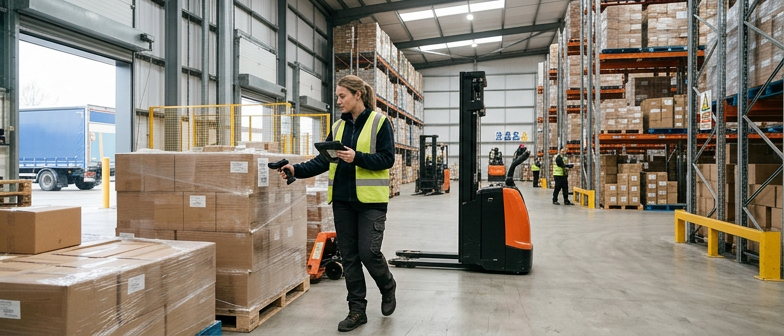
Modern warehouse and logistics management sits at the centre of business logistics, connecting purchasing, inventory control, and customer delivery into one coherent system. Well‑run facilities coordinate warehouse and logistics work so that stock arrives on time, is stored safely, and is picked and packed with minimal handling. This discipline balances cost, speed, and reliability, using accurate data on orders and inventory to avoid stockouts, late deliveries, and damage, all while meeting health, safety, and compliance expectations that are common across mature markets such as the UK and Australia.
As supply chains become more complex and e‑commerce volumes grow, logistics transportation must be tightly integrated with warehouse operations to maintain short lead times and predictable service levels. Effective management aligns carriers, fulfilment teams, and returns handling so that physical flows match digital promises made to customers. By treating warehouses as strategic hubs rather than passive storage points, organisations can improve responsiveness, reduce waste, and create a resilient logistics backbone that supports better customer experiences and long‑term competitiveness.
Designing storage and inventory flows in warehouse and logistics management starts with understanding the physical and regulatory characteristics of the goods you handle. Palletised fast movers, fragile items, high‑value products and regulated Storage Goods require different layouts, racking systems and handling rules. A modern logistics storage design maps product families to specific zones, defines aisle widths and picking paths, and aligns them with safety guidance, fire regulations and equipment capabilities so that cubic space is used efficiently while safe routes are preserved.
Once product families and zones are defined, inventory flows must support the wider business logistics strategy. Fast‑moving items are placed in high‑access locations close to packing and dispatch, while slow‑moving or bulky stock sits in reserve areas. Inbound, put‑away, picking and replenishment are treated as linked processes so that each movement adds value and avoids congestion. Accurate location labelling, barcode or RFID tracking and clear standard operating procedures keep stock visible in real time and allow smooth integration with online ordering systems and transport planning tools.
Organising a warehouse for reliable performance depends on how people interact with these flows. Good practice in organising warehouse layouts focuses on intuitive wayfinding, minimal manual handling and clear separation of pedestrian walkways from equipment routes. Visual cues such as colour‑coded zones and floor markings reduce training time and error rates, while slotting rules keep frequently picked items within ergonomic reach. Periodic reviews of layout, based on pick data, safety reports and customer service metrics, ensure the storage design adapts to demand while balancing space utilisation, safety and speed of access.
| Design check | Safety & compliance focus | Accessibility & flow impact | Inventory control note |
|---|---|---|---|
| Zone goods by type | Separate fragile, high-value, regulated stock | Reduces conflicting traffic routes | Supports clear location families |
| Define aisle widths | Align with equipment and fire guidance | Prevents bottlenecks and near misses | Keeps locations easy to scan |
| Set picking paths | Limit reversing and crossing movements | Shortens walking and truck travel | Improves traceable pick sequences |
| Label locations clearly | Avoids misplacement of regulated goods | Helps new staff navigate quickly | Enables reliable real-time visibility |
| Mark pedestrian walkways | Protects staff from material handling | Separates people and equipment flows | Reduces error risk in busy zones |
| Review layout with data | Use safety reports as triggers | Refines slotting and travel patterns | Aligns storage design with demand |
Effective organising of warehouse space starts with clear zoning that mirrors how goods move from inbound checks to storage and dispatch. Separate fast‑moving from slow‑moving stock and keep bulk storage away from picking areas so staff are not crossing paths. Place high‑demand items near packing benches and main aisles to shorten travel while allowing safe movement for pallet jacks and forklifts. Mark pedestrian walkways, one‑way routes and loading areas clearly so daily warehouse and logistics work remains efficient and compliant with safety rules.
Within each zone, match racking and shelving to the size, weight and handling method of your storage goods, and label every bay, shelf and bin with simple location codes linked to your stock system. Group related items, avoid mixed pick faces and keep heavy or awkward loads at waist height to reduce manual‑handling risk. Review slotting using picking data so popular lines stay in prime locations and obsolete products are removed from valuable space.
In modern warehouse and logistics management, digital tools that provide real-time online visibility of inventory are fundamental. Cloud platforms link barcode or RFID scanning on the floor with central dashboards, so teams can see stock levels, locations, and movements as they happen. This raises stock accuracy, reduces manual checks, and shows which SKUs are moving quickly or stored in the wrong area. For companies running e-commerce and omni-channel fulfilment, being able to access warehouse data online from any site or time zone supports collaboration across operations, finance, and customer service around a single, consistent view of inventory in the wider business logistics environment.
Online visibility also improves decisions beyond the warehouse by connecting inventory data with logistics transportation systems. When digital tools share live information with transport management and carrier platforms, planners can optimise loading sequences, choose suitable routes, and adjust dispatch times to match capacity and service commitments. This helps avoid missed cut-offs, part-loads, and unnecessary expedited shipments in cross-border or long-haul networks. As warehouse operations, inventory planning, and freight movements run on one connected data flow, managers can coordinate storage, handling, and outbound delivery as an integrated end-to-end logistics process instead of a set of separate, reactive tasks.
To improve warehouse and logistics work, managers increasingly rely on operational data and independent market intelligence rather than intuition. By combining internal KPIs such as pick accuracy, dock-to-stock time and utilisation of storage space with insights from a major warehousing report produced by firms like CBRE, leaders can see how their sites compare with peers on cost per unit handled, energy use and labour productivity. This external benchmarking supports decisions on where to automate, when to open or close facilities, and how much capacity to commit for peak trading without undermining service for long‑term customers.
Online retail has reshaped warehouse and logistics work by compressing delivery lead times and multiplying order lines. Instead of shipping pallets to a few stores, operations now handle thousands of small, fast‑moving parcels ordered through digital channels. This shift demands highly efficient logistics storage, with clear slotting strategies, real‑time inventory visibility and tight integration between order management and the physical warehouse. Businesses that grew up around traditional wholesale often need to redesign their layouts, pick paths and packing areas so that fulfilment for online customers can run alongside existing business logistics without causing congestion, errors or delays.
To cope with these pressures, many companies partner with e‑commerce logistics providers that combine warehousing and logistics transportation into a single service. When selecting a third‑party, it is crucial to check how their storage and handling standards align with your product requirements, whether their systems can exchange accurate order and tracking data, and how reliably they manage last‑mile delivery during seasonal peaks. Good partners use data from their networks to refine inventory placement and route planning, making the whole logistics storage model more responsive. Clear service‑level agreements, transparent performance reporting and agreed escalation paths help ensure that outsourced fulfilment still supports your brand promise on speed, accuracy and customer experience.
How does modern warehouse and logistics management support overall business logistics?
It links purchasing, inventory control, and customer delivery in one flow, so goods arrive on time, are stored safely, and are shipped with minimal handling cost and delay.
What should I consider when designing storage for different types of goods?
Segment fast movers, fragile and high‑value Storage Goods into separate zones, choose racking and aisle widths to match handling equipment, and comply with fire, safety, and regulatory rules.
What are practical steps for organising warehouse space effectively?
Create clear inbound, storage, picking, and dispatch zones, keep bulk away from pick faces, put high‑demand items near packing, and mark pedestrian and vehicle routes to reduce conflicts.
How does online visibility of the warehouse improve logistics operations?
Cloud systems and scanning give real‑time views of locations and stock, improving accuracy, exposing misplaced items, and helping teams across sites coordinate decisions on inventory and transportation.
When should an e‑commerce brand use third‑party logistics providers for fulfilment?
When order volumes spike, service levels suffer, or you lack space and systems for high‑velocity parcel picking, a specialist provider can add scalable storage and integrated logistics transportation.